
In the Wake of Bondi: How Violence Begins & Where Healing Starts
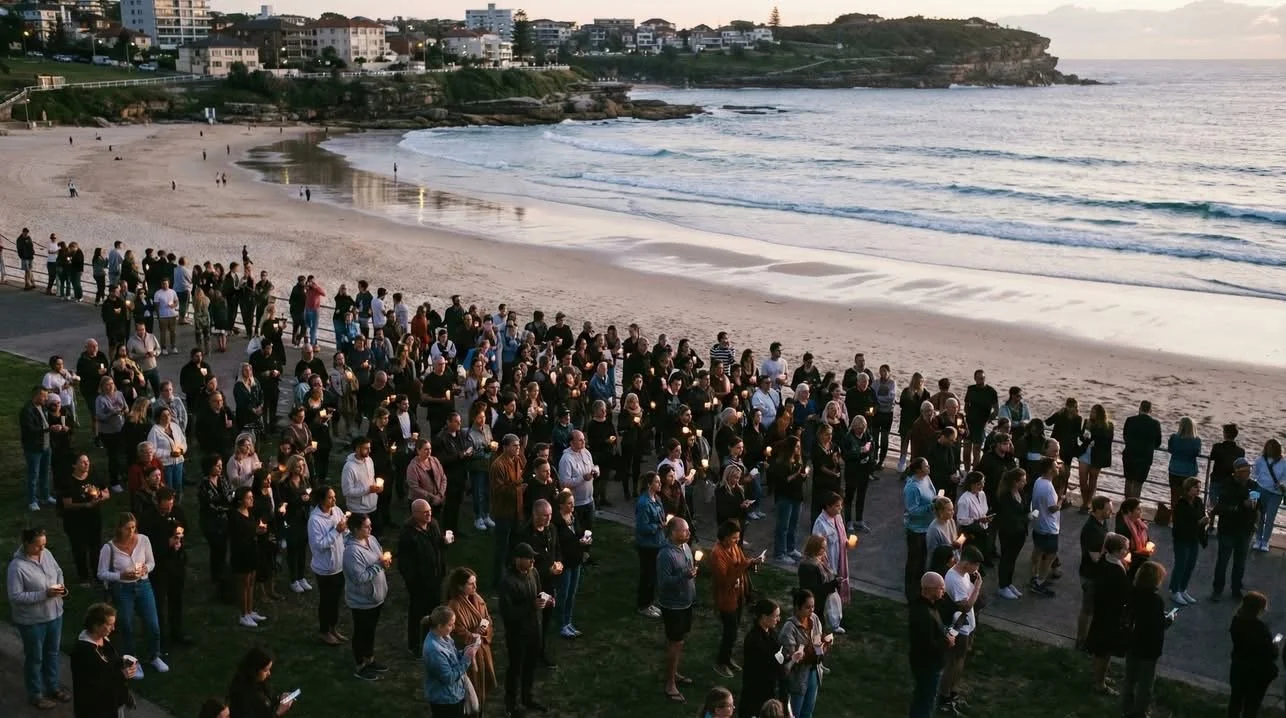
In the wake of the violent and horrific tragedy at one of my very own local beaches — Bondi Beach, on 14 December 2025 — I’ve been sitting with a heavy heart.
And I’ve been reflecting through the lens of Nonviolent Communication (NVC).
READ TIME: 4 minutes
While this level of extreme violence is, thankfully, rare in the Eastern suburbs of Sydney, the mindset that gives rise to violence and harm is heartbreakingly common — everywhere.
Because violence doesn’t begin with a weapon.
It begins with a thought. A belief that someone is wrong and deserves to suffer. A split into “us” and “them”. Good, evil. Right, wrong. A story that says:
“My pain matters. Yours does not.”
The human capacity for othering - for making someone an enemy in our minds - is what allows violence, both subtle and extreme, to take root.
This mindset is deeply woven into our cultures and systems. It’s what allows humans to justify harm, ignore context, and dehumanise others.
And if we’re honest, it shows up in our everyday moments too:
When we judge, dismiss, label, lash out, or shut down.
Whenever we harden our hearts, divide people into camps of right and wrong, or lose sight of someone’s humanity.
“Violence is the result of people tricking themselves into believing that their pain derives from other people - and that those people deserve to be punished.”
— Marshall Rosenberg
So when we respond to violence by sometimes simplifying the story, by saying —
“some people are just evil”
— we may risk missing a deeper truth.
Because violence, in any form, is a tragic, distorted attempt to meet basic human needs.
If we truly want to live in a world with less violence, we need to build relationships, and systems, grounded in empathy, dignity, and shared humanity…
…where people can trust that their needs matter — and learn to meet those needs in ways that do not cause harm to others.
And that work begins with us my friends:
When we choose to stay open-hearted with someone we don’t understand.
In pausing and resisting the urge to retaliate.
By speaking with honesty and listening with care
Even when it’s hard.
Even when we’ve been hurt.
This Christmas, as you gather...
with family, friends, neighbours — and maybe a few tricky characters – I invite you to hold this question close:
“How can I be the change I want to see… even here, even now?
Even in this seemingly small, forgettable moment?”
I’m holding in my heart my Jewish friends, and all those in the Eastern Suburbs community who are grieving in the wake of the Bondi tragedy. May we honour our heartbreak — and still choose the path of humanity.
Wishing you a peaceful, connected, and heart-full Christmas season.
With love, mourning, and hope,
Alexx